Kargo Search

21 June 2019

The First Ugandan Post-Budget-Speech Dialogue

The Budget for the Financial Year 2019/ 2020 with the theme “Industrialisation for Job Creation and Shared Prosperity” was delivered on Thursday 13th June 2019. However, Ugandans still wanted to evaluate it like they do for their introductions, weddings, birthday anniversaries plus other functions and had a well-focused discussion organised by Ministry of Finance, Planning and Economic Development; URA (Uganda Revenue Authority) plus CSBAG (Civil Society Budget Advocacy Group). It was the first Post-Budget Speech Dialogue of its kind and the main one was held at Serena Hotel KLA City on Thursday 20th June 2019, that’s exactly one week after Budget Day instead of the advertised 25th June 2019. Other dialogues in major cities countrywide like Arua at Tropical Suites Hotel (former Hillview - not fully attended), Hoima, Lira, Soroti and Kabale would take place the following Friday 21st. FOWODE (Forum for Women in Democracy) also organised its own later in KLA. Below are some ideas I jotted down from the URA Breakfast, but attributed them to noone in particular though they are from many voices. I’m using The Economist Newspaper policy of just sharing intelligence without bylines. None of these ideas below is my own, just my selection or paraphrase from the final hour of the breakfast before 1PM. A National Budget is a proposal of revenues and expenditures that Government expects for a new fiscal year.

The budget that Finance Minister Matia Kasaija read in 2019 was the Best I ever listened to in my Life even though I was busy designing kindergarten charts on manila papers and missed some parts. However, what made me love it first on TV then radio is the fact that I never heard him talking about new taxes being introduced on what not like in many previous budgets including from my Favourite Finance Minister Ezra Suruma. Maybe I missed those moments (I did not even doublecheck), but it sounded quite fresh as if the Oil in Bunyoro brought a different feeling this year, talking about seven more Trillions and stuff. Also, President Yoweri Museveni’s speech after the budget reading was quite amazing, just like the State of the Nation address he gave the Thursday before Budget Day. M7 seems to have mastered public speech. It’s not that am blinded by my affiliation to NRM, but this year is just different. Last year was: Investments, investments, investments! This year, the economy is now on shwooo [Whistle and Takeoff Gesture]:


Mbalala Area in Mukono on Jinja Road floods when it rains because industries were built in the wetlands… NEMA and Police need to do their work so that manufacturers follow… Environment needs attention like reforestation. We need climate-smart interventions… Government has made a deliberate decision to stop the importation of vehicles, save money to pay teachers and provide water… Government waived tax arrears… One of the Biggest Taxpayers to URA is Government, regular flows and arrears is their obligation… Who will pay taxes? Businesses must contribute and not individual people… Funding a budget is supposed to be from your resources and not debts. If we respecta tax law, we will not have a problem… SMEs are good at running away… 80 percent of the budget is going to energy, roads which require steel and cement… What are the risk factors of this budget? People near the Albertine Graben want their area to remain unpolluted. They do not care that the Government will get the money because they definitely will… In Nakaseke, per capita income of constituents was 112 Dollars in 2014 according to UBOS instead of 800 Dollars. We need to raise it to at least 500. URA should not overtax incomes so that we can help every district to reach 1,200 Dollars per capita income… Incentives are awarded to foreigners differently and members of the East African Community are treated like citizens. How can we compete with them that way? In relation to the 500 Billion tax waiver, Parliament rejected these waivers in 2013 because documents presented were not authentic… People in the village do not see the value of tax… We are all here talking this nice English because of teachers… Agriculture is an issue that concerns all of us. Budget allocation to it should be increased even more… 21 oil fields have been discovered in the country; 14 are commercial… The country has to prepare itself; Government has prepared the institutional framework to take forward projects of this magnitude… Land acquisition is going on, Environmental and Social Impact Assessment (ESIA) dialogues are going on. Geotechnical assessment is being carried out to make sure the land can accommodate the activities to be carried out on it. Can the ground hold this equipment? Investors have a role to play in taking these decisions forward. Benefits of the oil and gas sector are broader than revenue acquired from selling crude oil. 20 Billion Dollars will be coming in during the next three to five years. The Tourism industry will benefit when foreign workers come into the country for five years; we prepared for Chogm but the workers won’t need much government support. This period is being used by Government to prepare; we are going somewhere… Industrialisation without exporting will not lead us anywhere. Domestic borrowing also involves foreigners investing in local securities… If we cannot save, we cannot invest. Many in the SME sector cannot save because we have less than five employees according to the Law… Since markets are closing around us (Rwanda closed border, DR Congo has Ebola and South Sudan is at war), Industries are operating at less than 50 percent capacity… Challenges ahead of budget implementation are real… For the issue of steel and cement, if government assigns a project, the contractor is deemed to have already paid VAT… Government should find a way to advertise what they are doing with the taxmoney: You can see roads, hospitals, etc. How do we push this information and show where the money is going? There is a Budget Week at Kololo Airstrip! 30th June of every year, filing of returns is required by URA… We have risks in everything we do in life… Failure on revenue targets will force government to adjust the budget through Parliament… If the electricity went off today, will the 70 percent who do not have electricity be affected? They will be badly hit because hospitals will not run, medicine will disappear. So more good roads everywhere are also important, that way pregnant women can get to the hospitals quickly or give birth smoothly. There will be soap for you to wash your clothes, etc. 68 percent of products sold in Ugandan supermarkets are now from within…

M7's Budget Speech 2019

Speech by H.E. Yoweri Kaguta Museveni
PRESIDENT OF THE REPUBLIC OF UGANDA at the reading of the National Budget – FY 2019/2020 Serena Hotel - Kampala - 13th June 2019

H.E. the Vice President,

Rt. Hon. Speaker,

His Lordship, the Chief Justice, (Oh the Deputy Speaker, he's there)

Rt. Hon. Prime Minister,

Rt. Hon. Deputy Prime Ministers,

The Hon. Alhaji Kigongo,

Hon. Ministers,

Hon. Members of Parliament

Their Excellencies the Ambassadors,

Distinguished Guests,

Ladies and gentlemen.

Since I addressed the Nation on the 6th of June, 2019, a number of other Ugandans have died including my clan sister, Nyina-Omukama Christine Biira, Mukirania of the Rwenzururu Kingdom. Let us stand up for a minute of silence to remember them. May their souls rest in eternal peace.

The Banyankore had an elaborate judicial system that encouraged harmony and conflict avoidance, unlike the present system that we inherited from the West that tends to increase conflict and is adversarial. Consequently, the Banyankore systems had a long list of offences that one had to avoid.

When I addressed you last week, I deliberately committed two of those offences: Okutsyorira the members of the Opposition and Okurengyeza the others. Okutsyorira is like if one’s wife’s mother had been a prostitute but that person had noticed good qualities in his future wife and they got married, her family background notwithstanding. According to Banyankore jurisprudence, it is totally forbidden for one, when angry, to one day say: “after all your mother was a prostitute”. This is the offence of okutsyorira. Yes, it is true that her mother was a prostitute. The Banyankore question then was: “What use will be served by taunting her with that history? Why don’t you give her a chance to live her own life?” It was, therefore, an offence and in an inter-clan tribunal, one had to kuhoonga (pay a fine of a cow or cows). In the Western system, they call this fair comment. The court will only concern itself in “establishing the facts”. However, some of the facts are not helpful to society.

Similarly, last week, I admit that I committed the offence of okutsyorira the Opposition when I said that they were neither Government nor Opposition but they were “nothing” and I quoted some “facts”, like the modern courts, to prove my point.

The points I put before the Public Court were that for 24 years of Uganda’s Independence, I was in the Opposition ─ DP (1960-70); briefly in UPC (September 1970-January 1971); Fronasa (1971-1980); UNLF (1979-80); PRA-NRA-NRM (1981-1986).

However, it was during those years that I helped most, first, the citizens in North Ankole and, later, the wider Uganda and even Africa (in some modest ways).

With the Local Community, the Banyankore, the main challenge was to wake them up from tradition and help them to see the importance of modernization as we keep the positive elements of tradition. Our communities’ tradition of exogamous marriages as opposed to endogamous marriages must be maintained because it avoids in-breeding (obutembane), etc. However, the Banyankore custom of drinking milk without boiling it, had to face my wrath when I came to know that a Frenchman, Louis Pateur, in the year 1862, had discovered organisms that cannot be seen by our eyes, known as bacteria, that do both evil and good, depending on their types that are found in foods, water, etc. Some of the bacteria cause diseases, like streptococcus that causes cellulitis that our Baganda people wrongly call edogo (witchcraft) caused by an ill-wisher laying etalo for one. However, some of the bacteria such as lactococcus cause milk to ferment from amashununu (fresh milk) to amakamo (which the English call “sour milk” because they do not have enough words).

At the age of 14, in the year 1959, I left my local area of Ntungamo (Kafuunzho, where a man by the names of Tashobya has mysteriously taken possession of my land and built a very big school there) and went “abroad” to Mbarara to, for the first time, stay away for some months from home.

The Ntungamoists regarded Mbarara, only 40 miles away, as so “far away” that they would say: “kworiza kugaruka, nibyo biro bya Mbarara” ─ “it will take you a long time like somebody going to Mbarara”.

In Mbarara High School, Sunday was a visiting day ─ you could go out of school to visit relatives, etc. My first Sunday, I visited a family that was known to my parents. The second Sunday, I visited Mbarara Government Stock Farm which the Banyankore were calling: “Farm y’ Omujuungu” ─ “the White man’s Farm”. There, I saw, for the first time, modern farming practices: dipping cattle to kill ticks; rotational grazing; etc. The cattle, both indigenous and exotic, looked very fat and growing fast. When I went home for the April holidays, the first thing I told my father was the better farming practices I had seen in Mbarara. My journey of transforming my family, my relatives, my community, Uganda and even contributing to Africa’s transformation had begun. Starting with 1959 to 1986, a period of 27 years, I was not, meaningfully, in any government position but I was, actually, in the Opposition for most of the time.

Nevertheless, it was during that time, that I started working on changing the people around me, changing Uganda through the student Movement, contributing to Africa by visiting the liberated areas of Mozambique in 1968, while still a University student.

With the social-economic transformation of North Ankole, although I belonged to the Opposition DP, I worked under and with some positive elements of UPC which was controlling the government. Why? I did not want the UPC to interfere with my mission of transforming my people from nomadism, subsistence farming, etc., to quasi-modern farming, education for their children, better health, better houses, etc. As DP supporters, we had tried to win in 1962 but the UPC and Kabaka Yekka, using hooliganism (attacking people), cutting people’s coffee, gerrymandering constituencies, etc., had been declared winners by Mr. Peagram, the departing British Director of Elections. As a pro-people activist, I could not stop working on the modernization of my people because UPC and KY had undemocratically grabbed power, assisted by the incompetent election machinery of the British.

As long as the new rulers did not stop people from attending classes in the school system and did not stop us from sensitizing our people about modernization, we continued. Our method of work was to use small meetings to pass on the non-political and purely developmental message of the four steps: stop nomadism; go from subsistence farming to commercial farming; do so with ekibaro; and, later on, started talking about stopping land-fragmentation on inheritance. No message about politics that would invite the clampdown from UPC after they had destroyed their opportunistic allies of Kabaka-Yekka.

In fact, after our studies in the universities, many of us joined government departments and I, even, joined UPC in September, 1970 and even encouraged the Nyabushozi area people to join UPC. Political Parties are a means to an end; they cannot be an end in themselves.

The end is to transform the people: the family, the area, the country and Africa. Transform them how? By making everybody join the modernity of the four sectors: commercial agriculture with cura; industries; services; and ICT. To have subsistence farmers in your area continuously and you call yourself a leader, you are a mockery of leadership. We actually wanted to help UPC deliver but their internal weaknesses could not allow them.

When UPC, which had some ideas about politics, collapsed in 1971 and was replaced by the more incapable and dangerous Idi Amin, we had to now go to another level, the Armed Resistance. Even here, our methods were principled and carefully thought out. We never used terrorism ─ attacking soft-targets, attacking non-combatants, etc. We never used assassination. Here, in Nile Mansions, I vetoed a plan to assassinate Oyite Ojok by our fighters. During all the time of the fighting, I rejected the plans to assassinate Idi Amin, Obote, etc. These methods of using violence carefully, even when you have to use violence, are not only principled but also strategic. I am now able to work with the children and grand-children of Idi Amin, Milton Obote, Okello Lutwa, Oyite Ojok, etc., because there is no personal enmity between me and those families.

Would that be the case with these younger generations had I assassinated their parents, beyond the usual losses of war?

Before the war, we were very careful not to arouse the suspicion of UPC which would cause them to interfere with our social-economic transformation efforts. I remember, for instance, the incident in Kazo Primary School, where all the elders of what is now Kiruhuura District were gathered to discuss the plans of building Kaaro Secondary School ─ as a Parents’ School. The issue of fund-raising came up. This was in 1967 when I was aged 22 years of age. I warned them not to collect funds without the knowledge of the UPC government. Otherwise, they may think that we are raising money to fight them. When I checked, I found that there was even a law known as the Public Collections Act of 1966. I had to come with two elders to the Police Headquarters in Parliament Building and we got the permission.

Besides, the UPC government had negative elements but it also had positive elements. One example were the programmes of His Excellency John Babiiha of modernizing the Livestock Industry by introducing tick control measures, water harvesting by the way of dams, creating beef ranches such as the Ankole-Masaka Ranching Scheme, tse-tese eradication programmes, etc.

The main weakness of these programmes was that they were only for the elite and the traditional farmers were left out completely. This aspect, we criticized. However, it was better that, at least, the elite were doing modern farming even when the traditional farmers were still forgotten. Previously, both the elite (Abaasoma) and the traditional farmers (Abataasoma) were out of the modern farming. A half-full glass was now better than an empty one. My engagement with Mzee Babiiha was to convince the Jokwano, (Abaasoma) that the traditional cattle keepers, with sensitization, could also do modern farming. Although the elite tended to underrate the traditional cattle-keepers and their potential for change, Mzee Babiiha actually supported our efforts. That is what serious Opposition means. At no time, during the 27 years of my political social economic efforts, did we try to “kuleemesa” (to fail) the governments that were in power: The British, UPC one, Idi Amin, UNLF, UPC two or Okello Lutwa. Instead, we were always trying to use the positive points that existed in the respective governments, even when we were fighting. Idi Amin built the Hima cement factory and the salt processing factory at Katwe-Kabatooro. We never tried to blow up those factories even when we were fighting Idi Amin with guns. Why? It is because our line is that Uganda needs more and more factories, not less, whether the NRM is in power or not. When the NRM eventually came to power after many years of struggle, the country and the NRM were actually, in some small ways, helped by those factories. Nile Mansions and the Conference were actually built by Idi Amin.

Obote had only dug the foundation; it is Idi Amin who finished it. Uganda House was built by Idi Amin. The Post Office building where the NRM Secretariat was housed for many years, the Nalukolongo Railways’ workshop, etc., were built by Idi Amin. Nevertheless, we had to oppose Amin because he had fallen below the threshold of the minimum Patriotic African standards of leadership ─ i.e. Patriotism, Pan-Africanism, social-economic transformation and democracy and he had no right to do that; however, whatever little good he did, we had to preserve it.

Yet, these days you hear of groups that talk of “Okwokya Kampala”, wanting to burn the petrol stations, etc. Indeed, Kayiira tried to blow up a petrol tanker that he had parked between the Nile Mansions and the present Hotel Royale when all of us were inside the Nile Mansions. That is ideological and strategic bankruptcy.

The UPC government of 1962-1971, which we did not support politically, nevertheless, met some of the elements of the threshold for acceptability. Especially, on principle number two of Pan-Africanism, Obote had frustrated the East African Federation, but he was not totally hostile and we were, indeed, beginning to work under him to continue to push that effort. On social-economic transformation, the UPC was tarmacking some roads, building some schools and hospitals. It is on patriotism and democracy, that they completely failed.

It was because of the two positive points that they somehow possessed that we were ready to work with them and under them to see how far we could push matters in the desired direction. Since they were panicky, not well informed about security and defence, ideologically limited and, therefore, patchiest, we were careful not to make them misunderstand us as people who intended to fight them. To do so, would be ideologically and strategically bankrupt on our side because they would, then, deny us the opportunities to preach transformation like we did between 1966 and 1971.

When, therefore, I see groups who say they are opposition, but preach disruption, support arson, do not use the many opportunities that are available to sensitize people under them to metamorphose social-economically, yet some of them are drawing huge salaries from the Consolidated Fund, I am tempted to use a strong negative word to describe them; but I will keep it to myself for now. That is when, therefore, during the State of the Nation address, I committed an offence of “Okutsyorira” the Opposition. Under the Banyankore-Bahororo-Banyakitara jurisprudence, I would, nevertheless, most likely escape punishment (ekiheneso) because the community is shouting in unison that “bakatukabya” ─ we are tired of the negativity of those people.

Regarding the “Kurengyeza”, it is what in English they would, probably, call a cryptic remark. It is like a boy who noticed that his mother was sitting carelessly around the fire and, without revealing the actual reason, suggested that when you warm yourself, it is always good to also stand up and stretch your legs and not to stay too long on the fire. While I was lambasting the Opposition, I was politely telling the others that the acid-test of leadership in the under-developed, pre-capitalist societies of the 3rd world, is the ability to wake up communities to go from negative traditions to the money economy with ekibaro (cura, otita, aimar). Where this has been done, such as in South Korea, China recently, etc., the societies have become affluent. Where it has not been done, like in Central and South America, Africa, etc., you can see the misery of the people on the televisions (TVs). I regard it as a big mistake to be part of a society and I am a leader but I fail to guide them, ideas wise, about social-economic metamorphosis. The kurengyeza, therefore, is a benign activity that will not attract ebiheneso (punishments). The transformation of the people in the cattle corridor has enabled them to build better houses, use solar power, do water harvesting, sponsor children in Universities with private sponsorship etc. During the dry seasons, these people have been hiring, at their own cost, water tankers from road companies to bring water and re-fill the dry dams. Once you transform the households, you empower the country.

Our traditionalists need to also be careful. Europe was greatly assisted by the “Enlightenment and Rationalist Movement” that started from the classical times of Plato and others. We need to study more of this enlightenment and rationalist movement in Uganda and use it to look at our superstitious societies, weighed down by negative traditions and lack of knowledge. The British Archaeological Society personnel, Dr. Sutton, did excavations in Ntutsi and Bigo-Byamugyenyi. He found that those settlements were bigger than the city of London that time. These were the dynasties earlier than the dynasties colonialism found here: the dynasties of Balangira in Buganda, Babiito in Tooro and Bunyoro, Bahiinda in Ankole-Karagwe-Buhaya-Kigoma, etc. That was in 900 AD.

These were the dynasties of Batembuuzi and Bachweezi. These Kingdoms have, therefore, been here for a very long time ─ certainly, more than 1 millennium. There is a country which did not exist that time. This is the USA. It is only 400 years old if you start with 1623 when the first European settlers arrived in that area. It is now the most powerful country in the world ─ more powerful than all the old kingdoms of Europe, not to mention the ones of Africa. Therefore, the traditionalists, like the careerists I just talked about above, need to be careful. Do not continue to kugumaza (divert the attention of) our people or even obstruct them. We need a thorough talk as to which traditions are still rational in view of modern science. Actually, science is not modern. It is ancient; but the people did not know all the mysteries of God through science. We now know that etalo is not edogo. Please, let everybody spread this. Africa needs integration for survival ─ economic and strategic security. Let everybody emphasize that, instead of trying to create parochial chiefdoms.

Recently, we saw the debate about our late comrade, Professor Nsibambi and his heir who is none other than our daughter, one of the girls of our comrade. Actually, Professor Nsibambi had told me about his determination to make his daughter the heir. I am a traditionalist but a traditionalist who wants a strong Africa. That is what I told the Buganda Lukiiko in my speech of the 2nd August, 1993, when I opened that body. Africa cannot be strong with the traditions that disable her. Therefore, all traditions must be audited with that in mind.

I saw lawyer Mulira arguing legally about this issue. With me, when dealing with issues, I never start with legality, but with legitimacy. Is it legitimate, is it reasonable, is it rational for girls to inherit their parents’ wealth and responsibilities in some circumstances? In the modern context, the answer is an unequivocal: “Yes”. Yes, the Banyankore in the past never allowed girls to inherit for very good reasons of that time. The Banyankore, like the other tribes of this area, are exogamous and also patrilineal. Moreover, the clans were, sometimes, at war with one another. Since the girl had to marry outside the clan, was it wise to allow her to take the heritage of the clan to the clan of her marriage? What if this clan was to fight us tomorrow? Those were the considerations of that time and they were legitimate. Today, however, the considerations are different. The main challenge is to produce modern wealth ─ commercial agriculture, factories, hotel, ICT companies, etc. Is it reasonable for tradition to force a Mulwana or a Nsibambi who, in his life, has built up a string of multi-billion shillings’ business companies to bequeath all this to a lousy nephew because he is a male or to leave the powers of selecting the heir to the clan members some of whom may not have bothered to wake up to the need for modernization? Unless, of course, we do not know well what a Musika is supposed to do today. In Ankole, the busika meant inheriting the property and even the wife.

Recently, I had to atone for the injustice of my grandfathers who, in the 1930s, had given all the cows of one of their brothers, Kachuuya, to his brother, Kabuguma (my direct grandfather) because he had died as enchweekye (to die childless), his two daughters (Kobushuuru and Kakwangire) notwithstanding. Girls, because they could not fight the clan and tribal wars, were not counted as children. Although my father is not the one who inherited those particular cattle, I called my 90-year-old aunt, Kakwengire and gave her, her father’s heritage with some interest.

The way the law is, now, is reasonable. It gives absolute powers to the creator of the wealth to dispose it the way he/she deems fit except for the children who are still minors. I think those are entitled to something and spouses are also, I think, entitled to something. What Africa lacks is wealth creation on a serious scale and not negative traditions and heirs. The latter two are in plenty. We should not discourage the views of wealth creators by interfering with the Will of the dead. The living wealth creators may, then, say: “Why should I toil if my wealth is going to be messed up by the clan?”

I had a good modus vivendus with my late father. He still believed in Kujugisa (bride-price) for the girls who were still under his direct care. I rejected kujugisa for his grand-daughters, my daughters. Instead, I would give my girls cows to escort them into their marriages. That was the best way: live and let live.

You heard the budget. My appeal to all the leaders ─ political, religious, cultural ─ is please, work to modernize the families or family under your influence by convincing them to join the money economy with ekibaro (cura, otita, aimar).

In my up-country trips I have pledged to create 3 new additional wealth and jobs creation’s funds. These will be: the zonal fund for import substitution through value addition; the Emyooga (specialized skills/trades) fund for the following 15 activities:

1. Boda Boda Association;

2. Women Entrepreneurs’ Association;

3. Carpenters’ Association;

4. Salon Operators’ Association;

5. Taxi Operators’ Association;

6. Restaurant Association;

7. Welders’ Association;

8. Market Vendors’ Association;

9. Youth Leaders’ SACCO;

10. PWDs’ Association;

11. Produce Dealers’ Association;

12. Mechanics’ Association;

13. Tailors’ Association;

14. Media operators;

15. Performing Arts and Musicians.

SACCO for all the elected leaders of: Local Government, NRM structures and the leaders of other parties if they are not allergic to wealth creation.

The value addition fund will be at the zonal levels: Lango, Acholi, etc. The other two funds will be at the district levels and will be open to all people in each of the categories if they choose to join.

I thank all of you.

07 December 2013

Financial Papers (Business Quotes)

"It is ALLAH who has subjected the sea to you, that ships may sail through it by HIS command, that ye may seek of HIS bounty and that ye may be grateful..."
- QURAN 45:12 (Bowing the Knee)

"Bring the whole tithe into the storehouse, so that there may be food in MY house, and test ME now in this if I will not open for you the windows of heaven and pour out for you a blessing until it overflows..."
- THE LORD GOD ALMIGHTY (MALACHI 3:10)

"For to everyone who has will more be given, and he will have abundance..."
- JESUS CHRIST, an Israeli carpenter and teacher, also known as the "King of the Jews" (MATTHEW 25:29)

“Young people always want to rush things. They want to see growth and success immediately which can’t be the case. In many cases, when you rush at the beginning, your success will be short-lived and you are very likely to fail in the long run. You are actually better off starting out slowly and building a strong business foundation which will guarantee you long term success...”
- SUDHIR RUPARELIA, Ugandan-born Property Baron (Forbes Magazine’s Richest Man in East Africa 2014)

"Be a yardstick of quality..."
- STEVE JOBS, Chairman, CEO and Co-Founder of Apple Inc.

"Success is a challenge, failure is the formula. When you fail, you know that you are growing... Your network is your net worth..."
- PATRICK NGOWI, Helvetic Solar Contractors (Tanzania)

"People can get information - on entertainment, politics, finance - much easier than before. That will change the way people do business, the way people live..."
- ROBIN LI, Chinese Businessman who beat Google in China with his Baidu Website

"There is no Happiness for man but to eat and drink and to be content with his work..."
- ECCLESIASTES 2:24

“The mortality rate of businesses in Uganda is high because of extravagance; no frugality whatsoever…”
– YOWERI MUSEVENI, Uganda’s longest-serving President since 26th January 1986 during the 2013 Inspire Africa, Entrepreneur Challenge

"Let us put our heads together and work...’’
- ALIKO DANGOTE, Nigerian regarded as the Richest African (controls much of Nigeria's Commodities Trade)

"There is a danger of getting excited over things and then you start making mistakes; Man is tested by gold and gold is tested by fire..."
- MARTIN DRITO, Madi-Okollo County (Arua) MP in a 2013 NTV Interview

"Children must be taught the ability to find problems, solutions and achieve results! If you do not do that, then the education has gone a mess..."
- PATRICK BITATURE, Ugandan entrepreneur

"Let us cast aside business forever, except for others..."
- ANDREW CARNEGIE, Scottish American steel magnate

"...as we enjoy great advantages from the inventions of others, we should be glad of an opportunity to serve others by any invention of ours; and this we should do freely and generously..."
- BENJAMIN FRANKLIN, one of the founding fathers of the United States in the 1700s

"Edison failed 10,000 times before he made the electric light. Do not be discouraged if you fail a few times... I do not think that there is any other quality so essential to success of any kind as the quality of perseverance. It overcomes almost everything, even nature... Try to turn every disaster into an opportunity..."
- JOHN D. ROCKEFELLER

"The only thing worse than being blind is having sight but no vision..."
- HELEN KELLER

"You have to think anyway, so why not think big..."
- DONALD TRUMP

"Work is invincible..."
- LILIANE BETTENCOURT, L'Oreal's grand dame

‘‘Money should never be a measurement for anything...’’
- ASHISH THAKKAR, British National living in Dubai, UAE and referred to as the Youngest Billionaire in Africa. (He is founder of the pan-African multi-sector business conglomerate, Mara Group. A serial entrepreneur who started his first company at the age of 15, Ashish built a conglomerate of real estate, information technology and manufacturing with operations in over 26 companies and employing 7,000 people worldwide in less than two decades.)

“It’s not the employer who pays the wages, he only handles the money. It’s the product that pays the wages…”
- HENRY FORD

“Just do your work, forget the misery…”
- RUSSELL SIMMONS

“If we run our society as if pieces of paper (money) is wealth, then we are nuts. Humans are the wealth…”
- JEM BENDELL (The Money Myth)

“The way to find your Way in life is to ask GOD or the universe, ‘How can I be used?’…”
- OPRAH WINFREY

"I'm not somebody who believes in money sitting in deposits in bank accounts. When I make money, I reinvest it straight away in new ventures..."
- SIR RICHARD BRANSON, English Entrepreneur of the Virgin Empire - Trains, Planes, Mobile phones, Internet, Wine, Music and Holidays

“There is nothing for free. Work extremely hard to earn what you’ve got…”
- MZEE JOMO KENYATTA (Harambee!), the first President of Kenya in 1963

"If you begin with prayer, you will think more clearly and make fewer mistakes..."
- SIR JOHN TEMPLETON

"(A successful artist) knows how to manage risk. It's like dating a beautiful girl who is not in your league..."
- MAURICE KAWEEKWA, a very talented artist

"So many people have abused me that how can you go to St. Mary's College Kisubi and be a farmer?"
- JEAN (RWAMUKAGA) KAAHWA, AGCO Africa Agriculture Ambassador since 2014 and Managing Director Shalom Fish Farm Limited

"All the literature on mobile money was about the poor and the unbanked, but I saw it as a perfect solution for the SME as well. I decided to build the first mobile money-ready accounting system in the world..."
- FRANCIS OTIM, MYAccounts CEO

"Let money work for you, not the other way round..."
- ARSHAD (BHOLIM) AHMED, entrepreneur

"High thinking, simple living..."
- ANDREW MUHIMBISE, a Ugandan investor

"Work hard, it pays..."
- MARIAM TAISA

"I've worked in an economy that rewards someone who saves the lives of others on a battlefield with a medal, rewards a great teacher with thank-you notes from parents, but rewards those who can detect the mispricing of securities with sums reaching into the billions. In short, fate's distribution of long straws is wildly capricious..."
- WARREN BUFFETT, the 20th Century's Best Stock Market Investor

"Even the Tallest Tower started from the ground..."
- CHINESE PROVERB

"Better than the ignorant are those who read books; better still are those who retain what they read; even better are those who understand it; the best of all are those who go to work..."
- INDIAN PROVERB

26 October 2013

What Do Developing Countries Need?


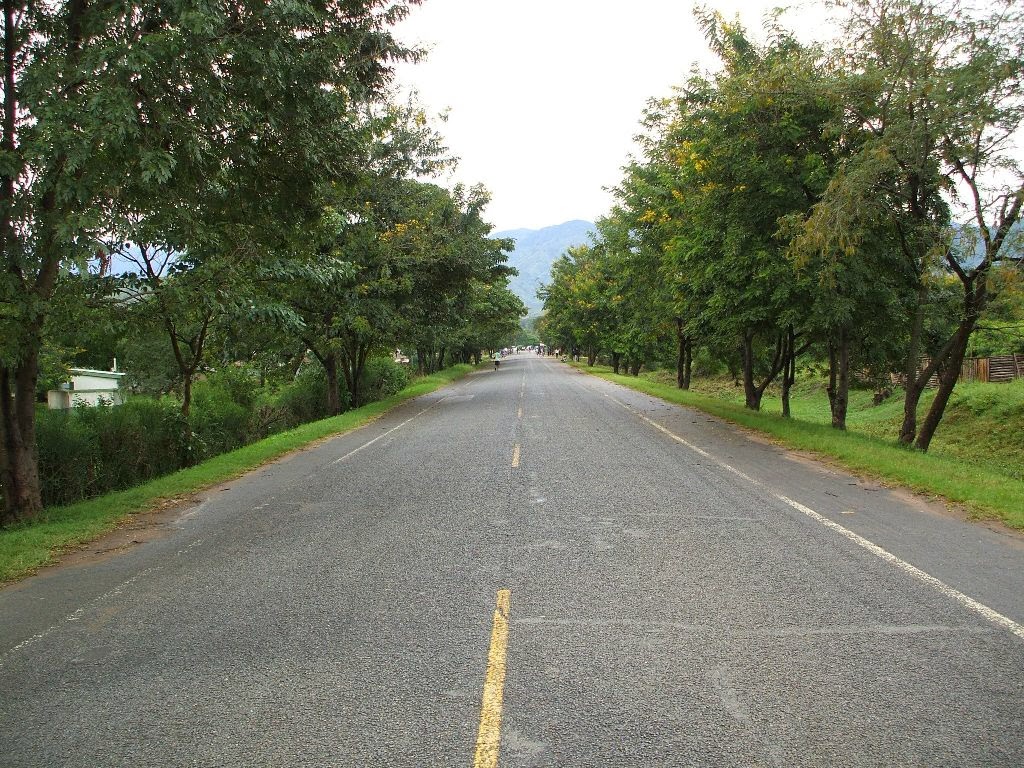
Macadamised Boulevard near Rwenzori Mountains (Western Uganda)


At sunrise on Wednesday 11th June 2008, someone asked me if Uganda is developed. Stunned by the ironic question, I half-heartedly replied “No”, because there are two sides to this issue. “We aren’t that developed but are heading there at a rate of 9 per cent (at least according to the National Budget then)…”

Okay, the first reason why we aren't developed is that when it rains heavily, murram roads are muddy and sometimes impassable.

Secondly, we still use bicycles and haven't learnt how to travel on skates (though there is a skateboard rink somewhere in Kitintale, Kampala - ‘The first’ of its kind in Uganda, according to Sunday Vision Newspaper in June 2008).

Thirdly and most importantly, political leaders or MPs (Members of Parliament) plus other people with the right power take some time to effect infrastructural development policies despite their voters’ grievances. Instead of allocating funds appropriately, the corrupt channel money to do their own business yet good roads cut the cost and time of doing business. Malawi is reported to possess the Best Roads in Africa. One day, some Malawians visited Kampala and were shocked to find potholes in our capital city.

Since 1962, several development partners like the World Bank have supported Uganda’s road transport and infrastructure development. The creation of the Road Agency Transformation Unit and its successor Uganda National Roads Authority (UNRA) are testament to that development priority. Uganda’s three time democratically re-elected president, Yoweri Museveni, has given priority to the development of physical infrastructure. Forget the many tall buildings mushrooming all over Uganda; many roads have been tarmacked ever since M7 came to power in 1986 when I was only two years old. From Bwera (West) to Soroti and Lira (East), there have been visible developments. Part of the Entebbe Highway was made more spacious with four lanes separated in the middle. Likewise, the Jinja Highway near Kakira was also redesigned.

I hail from West Nile (Northwestern Uganda) and the journey to my homeland used to be riddled with potholes created by the notorious LRA (Lord’s Resistance Army) Rebels who planted landmines in the Gulu Highway. The road from Karuma to Arua was murram and during dry spells, I would feel like I was suffocating from dust entering the bus. On rainy days, vehicles got stuck and journeys meant for one day would have overnight sleepovers within the bushy Kabalega National Park where dangerous animals like lions exist. After the route was transformed into an all-weather road, the Expected Time of Arrival and many hazards reduced. Meanwhile, the Northern By-pass for diverting heavy trucks in Kampala was also constructed despite complaints that it should have four lanes everywhere instead of two in some stretches. The Southern By-pass is currently under construction, with support from China, the world’s next superpower. A Chinese company CICO is also working on the Kaya Highway from Vurra (Congo Border) to Arua (at the Heart of West Nile) to Oraba (South Sudan Border) which will definitely reduce poverty.

The problem with Africans is that we focus too much on the image of how poor we have been categorised by Western powers yet the simple remedy is macadamized roads. Road improvement will reduce poverty in developing countries; that is the democracy that delivers. Entrepreneurs think governments cannot end unemployment by simply giving people money. It starts with mindsets; without a business plan, that fund cannot be multiplied but will just be misused. Nevertheless, most people desire growth and they do not need governments to feed them; they can grow their own food. They do not need governments to heal them; they can set up private clinics, use herbs that work or pray for divine healing. Developing countries do not need their governments to educate them; people learn from their elders, do personal research and attend private schools. Rural people do not need electricity from their governments; they can do without a national grid and use solar batteries, dry cells or wind power. However, they cannot tarmac their roads alone.

What developing countries need are well developed highways, durable, safely designed bridges and feeder roads connecting different villages plus towns and linking them to neighboring countries. With this tarmac network, people will naturally find efficient ways of maximizing roads. Their children will travel to school with ease even on rainy days; they will comfortably carry their agricultural produce like maize, mangoes, cabbages, pineapples or cassava to markets and explore many other enterprises for development like logistics and construction. Citizens ought to use social media namely Facebook, twitter and Blogger to express what they desire from policy makers.

AIKOBUA-EDWARD

13 August 2013

Integrity is key at FUCAFF

FUCAFF is the acronym for the Federation of Uganda Customs Agents & Freight Forwarders, an exclusive umbrella association for member clearing firms or companies registered in Uganda. With the slogan Fostering Tax Compliance with Stakeholders, it was formed in 2009 after UCIFA and its off-shoot UFFA to also coordinate with URA. The federation's secretariat is based in Kinawataka, Kampala - east of the Spedag compound behind the Railway Crossing and fosters clearing and freight forwarding management within the Northern Corridor - the Busiest Transport Network in East Africa. With Integrity as a vital Component in its Leadership and Management, FUCAFF is Uganda's forward-thinking Voice in the Business of Revenue Collection.

10 April 2013

ASYCUDA World Rolls Out...

An upgraded Customs Data Management System that Uganda Revenue Authority successfully piloted in Jinja during November 2012 is to be rolled out to the rest of the country. It is a web-based system, which allows traders to submit their declarations from anywhere on earth, among many other advantages. ASYCUDA World now moves to Entebbe in April 2013, according to Joseph M. Mwangala, Project Manager of the Customs Business Enhancement Project. In May, it will be rolled out to Busia/ Malaba and then back to Customs Business Centre (CBC Nakawa, Kampala) the following month. Tech-savvy businessmen can follow the process of their goods clearance electronically using the internet or mobile phones. There will be no need to carry heavy files but URA-licensed clearing agents can help guide importers and other taxpayers whenever they don’t understand certain technical terms. Agents will simply scan their documents and email them. This will minimize long queues at CBC and delayed clearance. For further inquiries, call 0800117000, a toll-free line or visit www.ura.go.ug!

31 March 2013

Empowering SMEs...

Keeping a small business running for many years is hard, but not impossible. The 8th Small and Medium Enterprises Forum was opened by the (Guest of Honour) Right Honourable Prime Minister of Uganda - Amama Mbabazi on Thursday 21st March 2013, the first of three days that would end on Saturday 23rd March at the UMA (Uganda Manufacturers Association) Main Exhibition Hall in Lugogo. After the Private Sector Foundation Uganda (PSFU) Executive Director's welcome remarks, the Key Note Address was given by Mr. Peter Ladegaard, representing IFC (International Finance Corporation) from the World Bank Group. An Issue Paper with questions collected from the participants early in the morning programme was also reviewed and the PM gave his feedback, then awarded certificates to key partner companies including Bank of Uganda, Stanbic Bank, One Solutions, Centenary Bank, Umeme, Jomayi Properties, Fresh Cuts, Warid Telecom, Niko Insurance, Finance Trust and Uganda Development Bank before giving his speech. James Mulwana (founder of UMA) was also remembered in an All-Stand-Up Moment of Silence. Despite the Office of the Prime Minister (OPM) Scandal being argued in court, the PM humourously asked, "Have you ever suffered a Theft? That's what happened to OPM." As Prime Minister, Mbabazi does not handle public funds at all but being the leader of Government business in Parliament and Secretary General of the NRM Party, he is at the centre of fighting corruption in Uganda and had to speak about what happened in his office. Kazinda had probably been doing his embezzlements for years and when he was about to be transferred, the PM asked for one more day to formally transfer Kazinda's duties through a handover because he noticed something fishy and that is how the rot was unearthed. Now that the barrels of oil drilled in Uganda are in millions, billions or whatever citizens want to hear, the private sector should benefit from this wealth since they are very important contributors to the economy (about 80 percent). Mbabazi complemented that SMEs are very important people government should be dealing with. Entertainment (that the MC reiterated as a jumper) was provided by a group of Karimojong Women who came with their babies for the first time in Kampala. They had saved 3.4 Million in one year simply by each member stashing away 1,500 UgX regularly, an admirable venture. The nearest banks from their homes are many kilometres away in Mbale but they pulled this off. (According to Bank of Uganda, only 20 percent of Ugandans actually have bank accounts while the majority keep their money at home.) Mbabazi, whom the women fondly sang about in their songs added them 1 Million as his contribution. EAC is rated highly among all the communities/ regional blocks in Africa, occupying the 19th spot among the Top 20 in the whole world. Notable is Rwanda which has the Best Start-up Profile for SMEs in the region though all the other countries also have their strengths. Mbabazi warned that the corruption involved in starting the construction of Karuma Dam should be ironed out or else we will return to the old days of "Power Rationing" yet power needs to be maximised. Corruption is systematic. He reminded the audience about the Ghost Soldiers Saga which also affected Government's image. While fighting Kony in Operation Iron Fist, only 100 soldiers lined up out of 1,000 paid officers. "What happened to the other 900?" During the one-on-one audience question session with the PM, a lady from Arua read loud a letter from her colleagues back home about an "expired" teacher for the disabled enterpreneurs especially the deaf and mute. She warned that everyone should be concerned now because in future anyone could have a relative who is disabled. The PM remarked that it should be a concern for every part of Uganda. An architect relayed his grievance of non-payment after contractual work for Ministry of Education and PM offered to follow up. Meanwhile, a farmer from Manafwa also uttered his complaint which the PM didn't understand, it was quite vague, etc. In the hall were exhibitions from URA, MTAC plus various companies including inspirational SMEs and a Turkish Delegation that set up B2B (Business 2 Business) Meetings at the back. This was a very good set up for people trying to start a business, needing advice or financial partners. As an annual initiative of PSFU, the theme of this free event in 2013 was: "Empowering SMEs to Access Affordable Financial and Business Development"...

02 November 2011

Managing Uganda's Oil Discovery (19th Joseph Mubiru Memorial Lecture)

“Those with phones from the generation that can’t be silenced should switch them off (completely)!” the MC started with an amusing request to the eager guests. From crying babies to grey haired seniors, the Victoria Ballroom at Speke Resort Munyonyo was incredibly filled on Friday 28th October 2011 by all generations of Ugandans plus some white guests. Many of the previous lectures were also given by whites as evidenced by the video that greeted us as we walked in. Seats were added outside in the balcony area but still spilled over. Rain fell close to the end of the lecture but it didn’t matter. What mattered most was the topic of discussion during Bank of Uganda’s 19th Joseph Mubiru Memorial Lecture. Started in 1988, the annual lecture honours Joseph Mary Mubiru, the First Governor of BOU (1966 to 1971).


(Current Governor) Professor Emmanuel Tumusiime - Mutebile was the first speaker. He was glad to give his welcome address after three milestones in the bank’s history namely: the Introduction of new banknotes in 2010; the Triumph of the new 50,000 note - voted as the Best Design in the World; and his own Triumph - named the Best Central Bank Governor in Africa 2011. “Bugalo!” (Hands Clap), he ordered and the crowd laughed. He’s the one who introduced the Finance Minister.

Maria Kiwanuka (famous for starting Radio One and Two - Akaboozi) was gracefully comprehensive in moderating the discussions. She impressively noted and reiterated the good points.

The Main Lecture though was presented by Professor Paul Collier, Professor of Economics and Director at the Centre for the Study of African Economies, Oxford University. Below are some of the ideas he shared: Oil belongs to the entire nation and not only Mining Companies nor the Locals from whose area it is mined though they must benefit or they will riot. “Money corrupts but Oil money corrupts absolutely.” We need to avoid the curse that plagued Sierra Leone because of its diamonds. We need Peace like Botswana that had a similar public lecture after discovering diamonds. Despite the fast tracking of the East African Federation, Uganda’s oil should not be claimed by the other four members of the community just like England’s oil is England’s oil, not Scotland’s. Germany used to be the Worst Performing Economy in Europe until the Germans said, “Never Again!” and they turned the tables. Now they are the Best. Uganda can do that. About 30 developing nations once asked Norway for advice on how to develop like her and they were told to invest capital outside their countries. Norway already had enough capital at home and so for every worker in the country, more was added outside. Uganda cannot use the same strategy because “Uganda is very poor” in capital stocks at home. So oil revenue must be invested within Uganda. There should be Rules and Instructions, Transparency and Accountability. Instead of secretive deals, there should be Auction where the Best Bidder gets to explore Uganda’s Oil. A good leader creates systems that have no use for leadership.

Godber Tumushabe, who critiqued Collier’s paper compelled the audience to himself by speaking without fear that Politicians shouldn’t run the oil economy but leave it to entrepreneurs and trained experts. He remarked that the paper was shy in tackling that aspect. He believed he was suitable for this task because he had read Collier’s books. “I don’t work in government” was the reason he gave for speaking his mind. By the way, he also felt Universal Primary Education (UPE) doesn’t add much to pupils and New Districts should become Centres of Production, not just for Political Votes. “We have boarded a train and it will take us to either Botswana, Sierra Leone or Monrovia…” Despite cries from the public for him to be added more time, Godber agreed to use his remaining five minutes to deliver his arguments. He confessed that Africa never develops because we don’t responsibly use the Time and Resources we are given.

During the audience responses, a miner who descends from a Kisoro family with over 30 years of mining experience blamed Greed for the ruin in Uganda’s Mining Industry. “What happened to copper and other minerals?” he passionately inquired. Check greed and we won’t have an oil curse! Another respondent mentioned human resource as greater than oil and shouldn’t be ignored. Ken Lukyamuzi wowed the attendees with his humourous language and fearless criticism like in ages past. This time he respected the occasion and didn’t repeat his trademark phrase – “What are you talking about? – but threw in a legal term “estopy” that amused many. MP Lokeris and another from Vurra, Arua also spoke, just to mention a few.

The Finance Minister blamed parents for killing children’s dreams. Why can’t someone study history? Why force them to do biology simply because they pass Biology yet their interest is elsewhere? It’s the carpenters and entrepreneurs who will push the economy forward. Maria proclaimed that she got access to some interesting data in her new Ministry of Finance, Planning and Economic Development (MoFPED) office that revealed that for five years before 2009, Uganda was listed among the Top 10 Fastest Developing Countries in the World. What do you think will happen when Uganda’s oil is mined, taxed, the money is saved and invested?

[DISCLAIMER: Everything is paraphrased from memory so some ideas may not be exactly what was said but that’s how I grasped them.]

14 October 2011

Stone Cold (2011 Film) and Film-financing Tips


Kargo Cinema brings you Stone Cold, a tragic movie about child labour, written by Michael Wawuyo (who plays the role of the man who buys away Kosai’s elder daughter as a babysitter leaving behind the injured daughter) en directed by Ugandan TV icon Irene Kulabako Kakembo who also directed All Our Children (2008). She seems to have a heart for Children. Well, she surely influenced me a lot while I was growing up watching UTV (Currently UBC). The movie was produced by Tri Vision, a company co-founded by Irene’s husband Joseph Kakembo. If this movie doesn’t make you cry, I promise it will move you somehow. It premiered at Alliance Francaise on Friday 17th June 2011 (World Day against Child Labour). Shot for one week in Kampala en 10 days in Kumi, the rain scene at the beginning was engineered artificially but made very believable and so was the bloody climax when stones fell on the main character’s two boys Yeko en Mariko. Imagine Special Effects in UG, those rocks falling on the boys in the gorge are actually sponges (like in a mattress) though they were painted to look like rocks. That’s why the one DSR 250 camera they used wasn’t damaged. During the shooting of this sad scene, a glass was also placed above the camera to minimize the dust falling from the sponges. You just have to watch this to believe me. The sound was also amazing, recorded alongside the video instead of separately, according to Shantos Sekitto (the Sound Man) who also doubled as an actor in the bar scene talking about how to “… turn stones into beer.”

A workshop on Camera, Lighting for film and Film-financing was held the following morning (Saturday) before another mass screening on Sunday, (both events) at the National Theatre en it was very ‘door-unlocking”. In the audience was a jeweler, animator, film maker, accountant, cartoonist, etc. Irene advised, “We (meaning her Crew, though the Actors/Actresses are paid) don’t pay ourselves. We each come once a year to bring something (in form of skills or any other value) to the table… Costs are fuel, food and so forth. Get into groups and work on a project!”

Joseph added, “Money will discourage you… Shoot in phases (even for many weeks)!”

Someone commented that he wished the sad parts were longer so that he could mourn more.

Edu asked Irene the challenges she faced as a director and she said it was during auditioning and casting actors, “Females were few.” Maureen Kibuuka (who acted as Kosai’s one armed wife) was found a week before shooting. They had almost given up on finding the leading actress and Irene, four or five months pregnant then, was contemplating playing the role. Then through someone who knew Maureen, the lady who had always wanted to act in a movie got her first role ever.

Personally, I was mesmerized by the water reflection technique used to film the four kids returning home after breaking rocks. As they get closer to the camera, it pans from filming the water reflection to capturing the upright kids.

After Lunch, the lovely Miss Barbra talked about “How to Keep More of the Money You Make”. Her business presentation defined what being Rich really means. It’s not all about Big Salaries, Cars or Bank Accounts but rather: spending wisely, making money work for you instead of working for it, hiding behind companies, setting goals, managing free time (first 8 hours of your schedule for Jobs, second 8 hours for rest [5 PM to 2 AM] en third 8 hours for your Business), working to learn instead of to earn only, investing in shares plus tithing. Andrew, the animator almost got the squares question right. They looked 16 at first sight as Peninah thought, for me I thought they were only 17 while Andrew counted till 23 en gave up but Barbra revealed that they were actually 30 squares meaning, “Wherever there is a Problem, some people see many opportunities. Instead of complaining about garbage in the city, form a company to collect all of it (en benefit from the problem)!” Irene introduced the participants to a Fixer, someone who finds everything needed in a film project, a job created using this principle since UG lacks professional fixers. Recommended reading was Robert Kiyosaki books. Good Luck!

30 May 2011

Four Thumbs Up

I’m a Gooner but strongly believe Manchester United’s football (read Alex Ferguson’s Philosophy) is very efficient every year even if not the Most Beautiful. Expectedly though, on Saturday 28th May 2011, Pep (Josep) Guardiola, the Best Passer of the ball during his playing career, with the help of his "L'equip Blaugrana" Catalans showed the Red Devils why the simple but hard (Spanish) Tiki - Taka Pass and Move is the Most Exciting Game Plan today by winning Barcelona’s fourth Champions League trophy in their second finals appearance against Man Utd (2 – 0 in 2009 and 3 - 1 in 2011). Not only is it easy on the eyes of spectators but also very efficient like the famous Total Football popularised by Johan Cruyff from Netherlands (The Orange Team). One of his best quotes is, "You always have to make sure that you score one goal more than your opponent."

Four days prior to that, (arguably the Team with the Best Facilitation in Uganda) URA FC beat KCC 2 -1 and were crowned for the fourth time in six years as the Eco Bank Super League Champions. The tax collectors clinched the season title in a year when their parent body (who celebrate their 20th Anniversary in September) was praised as “operating at 100 percent efficiency” though one of the departmental commissioners modestly confessed that it is actually 80 percent with room for “more improvement”. Banks and Traders now use their e-Tax Payment System, so heaven is the limit. URA's Tuesday game was like a super precursor of the illusive Pedro, lethal Rooney, gifted Messi and world class Villa spectacle at Wembley on Saturday.

Meanwhile at Casablanca Bar on Acacia Avenue in Kololo (a Kampala Suburb) on the same Sabbath, Orange was showing telecom users that its Lifestyle Portal is the Best in UG. Personally, I’m mesmerized by the ingenuity of the useful business idea and entertaining content on their Lifestyle Webpage (http://lifestyle.orange.ug/). “The future is bright, the future is Orange!” Choice and Today surely changes with Orange as it bridges the digital divide in UG from Koboko to Busia. Together, we can do more.

No wonder, even the colour Orange itself is amazing, though not my favourite. Green would do for me but Orange is a warm, vibrant and flamboyant color like energy combined with fun, the color of the risk-taker, the extrovert and the uninhibited. In Color Psychology it means adventure, optimism, self-confidence and sociability. It's used extensively by Al-Jazeera TV, Fanta Orange Soda, Splash Drink, etc.

Physiologically, orange vitalizes, inspires and creates enthusiasm. It is stimulating to the appetite and social conversation and therefore works well in restaurants and other food outlets. This can be achieved by using some form of orange in the décor, such as in the furnishings or the lighting. An up market restaurant will look more elegant with subdued versions of orange. Combine with aubergine, purple, or blue for a unique, contemporary and classy look!

Psychologically, orange gives the impression of affordability, depending on the shade chosen and its combination with other colors. Gentler than red, it's the energy of creation.

06 August 2009

The 5th Successful URA Open Minds Forum


(Photo of Professor Stephen Adei, Courtesy of www.ghanaweb.com)

"Having authority or power doesn't make you a leader. Power is a double edged sword that can be used for both good and bad.", Ghanaian Professor Stephen Adei (once the Chief of the African Bureau of UNDP) taught the gathering at Imperial Royale Hotel Kampala on Wednesday 15th July 2009. This was URA's 5th Successful (and very hilarious too) Open Minds Forum where anyone can "Be a part, be heard, be told"; I attended the first ever forum held at Hotel Africana many months back but this was probably my second. The program is a corporate interactive debate on topical issues of public interest. Allen Kagina, the URA Commissioner General confessed that the forum is always organised with a selfish motive "Aimed at enhancing Tax Compliance" but somehow URA gets to participate in community by promoting interactive feedback and promoting accountability. The theme that day was "Leadership and Nation Building", who would want to miss that?

The usual Chairman magnifique (Ugandan Government Spokesman appointed New Vision Publishing CEO) Robert Kabushenga wielding absolute authority introduced the members on the panel, his old girl URA CG Mrs. Allen Kagina felt she wasn't worthy. On the left end sat Honourable Eriya Kategaya, the current 1st Deputy Prime Minister of Uganda who has been involved in the liberation politics of Africa for a number of decades. He is also a respected statesman trying to rebuild the EAC (East African Community). Next to him was Professor Mahmood Mamdani, one of the lead discussants and also one of Uganda's foremost thinkers who lectures in an American university. He is the husband of Maisha Filmlab founder Mira Nair who also made a romantic movie entitled "Mississippi Marsala" starring Denzel Washington about the 1972 Asian expulsion by President Idi Amin Dada. Professor Mamdani brings original thinking to subjects that have become hostage to prejudice and stereotypes. On the right end was the visitor from Ghana. When Allen Kagina sent Kabushenga an email, his mobile browser told him that the message was truncated. It took 5 minutes to load. Professor Stephen Adei has about 9 degrees, he has worked all over the world and his printed CV fills three foolscaps.

Adei was the first speaker, "Positions give opportunity to exercise leadership ... A good administrator applies rules but good leadership changes dysfunctional rules. A good manager aims at efficiency, man aging the status quo is not leadership, it involves paradigm shifts. Leadership is a function; development of vision, strategies and empowerment of individuals. Having a picture is halfway. Vision without strategy is a dream, ally the relevant people behind your strategies. A leader influences others, takes a stand. In leadership, what you know is less important. Good leadership is an art to be learnt because it comes with principles. Combine talent with training. One of my favourite preachers named Myles Monroe once preached, 'Whenever a nation has a lack of quality legitimate and just leaders, national deterioration occurs.' GOD's answer to our moral problems is righteous leaders. Jews were used for 400 years as slaves in Egypt but when the right leader came about, they were freed in a week. Singapore is just a rock but in 30 years, the right leadership turned it from a third world country into one of those with the best quality of life. Those of us with gray hair know that Uganda has come a long way. Rwanda is one of the African countries that will make it on their own because of the leadership of Paul Kagame. There were two great leaders in the world: Churchill and Hitler. Always make sure that the dysfunctionalities are corrected. When Nkrumah was overthrown, the country was humiliated for two weeks. The soldiers had to beg people to go and work. Learn dependence of followers.

Transformational servant leaders build nations: (1) They tend to be people of character, your credibility is important. It's not an option, people want a leader they believe in and can trust or honour. (2) Highly competent irrespective of the discipline, willing to apply to the situation. (3) Care for their people: If you are a chief, what do you steal money for? I have never seen a person who can ride five bicycles at the same time. You get a free house, petrol, car, security ... Our system takes care of our leaders, it is criminal to be a leader and steal. Africans are very generous to their leaders. A good leader works harder than other people, leadership doesn't come easy to all of us. Our own selfish nature makes us want everything for ourselves. The president (M7) wants the average per hectare of farmland to be 1,000 US Dollars [about 2 Million UgX]

Cost is what makes leaders important: (1) Challenge the status quo for improvement; rebels always look back. (2) Provide a shared vision and get people dreaming again: Create a world class centre. Leaders must bring a new picture, people must be inspired towards a better future. (3) Powerful autonomy who are like a think tank and define a nation e.g. the National Bureau of Economics of Thailand (4) Build functional and effective teams, it is the responsibility of leaders to put together the right team. For this country(Uganda)'s development, not more than 10 ministries matter. Honesty, Capability and Commitment. Leaders balance continuity and change, take major decisions and change things (solve problems). They develop future leaders. They manage well the Prize (Privileges); Price (Cost); and Perils (Temptations) of leadership. Be very careful how you enjoy in leadership! If people realise that you are not with them, finished. Most effective leaders usually will not enjoy the privileges that come to them until they lift up their people.
In Cost, leadership is hard work, so many people are sick and hungry around you. They look at you like a father, you need a think tank, everybody comes to you. All my life, no body told me am handsome until I made it. When I come to the village with a Benz, immediately I assume beauty. The politics in the church is as bad as the politics in the state. If you are a politician, what is your job? What do you mean by nation building? Create a cultural identity for all people beyond their tribal identity! Every country has to come up with a political system. Americans have comfort with two term limits. In Britain, there are no term limits. In France, when you are 55, you are almost going to the grave. Democracy can be defined in terms of the parameters.

Economic Development: Improve the welfare of citizens, realise their full potential. Nations that have grown in the last 50 years had less corrupt bureaucracy; governance situation tends to be above a certain level; there is rule of law; peace; enough technology. None of these is a primary cost. 'Do what I say not what I do' comes from the Devil's Bible. What is the promise that Africa will have such leadership? On the continent as a whole, it's coming too slowly. Things that will make it happen include: (1) Supply of good leaders, the qualification to be President of Ghana (40 years, literate and not mad) is lower than the qualification to be a secretary of Adei, Politicians shift when societies shift. (2) National values. (3) Formal training of future leaders. (4) Civic Education. (5) Create incentive for good leadership. (6) Make the cost of bad leadership high and raise the cost of misrule (The Gospel reigns, most leaders have to change heart). (7) Provide alternative avenues for wealth creation. (8) Need a loyal opposition (They want something bad to happen to the country)


(Photo of Professor Mahmood Mamdani, Courtesy of www.hindu.com)

Ugandan Professor Mahmood Mamdani (who is wanted back at Makerere University Kampala. Chancellor Mondo Kagonyera reported that thinking became idle after Mahmood left) spoke next. He started in a relaxed mode that was meant to amuse. He revealed that he got a call from URA and when the lady on the other side asked if he was the one, he responded with a very worried and faint 'Yes' until the reason why he was Wanted was told; That relieved him immensely. He was basically invited to raise questions, "Professor Adei's argument is that Africa needs transformation. My presumption is that such leaders will never exist, you are talking of saints, not politicians. Any visionary leader given time will turn dysfunctional. Churchill became dysfunctional in peace time and lost the election. What do you do when the leader turns dysfunctional? The professor has no answer in his speech, maybe he has reserved the answer for a speech in Ghana. The answer is not in the domain of leadership but institutions. I begin with an example in the US. During the 2008 Election, CNN did a poll. Most who did the poll believed that the 2000 Election was stolen, the Supreme Court stopped a recount. The reason was political, what would be the cost of a reversed verdict, would the tensions between the red and blue states overtake the system? There was no foreign intervention, instead America embarked on a process to reform. The US survived eight years of usurped bad leadership, millions died in the war against terror. (1) The strength of US institutions helped to contain the damage of bad leadership. (2) There is no single African problem. I will outline two, but their solutions have to be thought through concretely: the Most Serious Political Problem is to be found in Congo, Sudan, Zimbabwe and Kenya. The political problem is an expression of a deeper social problem revolving around land. Who owns more land? Tribal rights, citizen rights. Zimbabwe was divided by land issues./ Darfur conflict started in the 1980s between agriculturalists and pastoralists (1987 - 9). The latter said, 'We couldn't make a living up north, so we moved south. We have to survive ...'/ Banyamulenge in Congo migrated towards the end of the 19th Century and have conflicts with migrants from Rwanda. But who is a citizen?
Second question is a question that divides the political class. It originated from the colonial system of Big Men, you are appointed from the top and removed from the top. It generates its own corruption, creates sycophants, otherwise they will not survive. It creates arrogance, this is not the critique of any individual. That is the psychology a system creates. Who will ensure a transfer of power. In some kingdoms, it was the work of the wives to blow the whistle if the king was too weak to lead the people. The transfer of power cannot be left to the person who occupies that position. It also happens in the opposition. The base of leadership begins with three fundamentals: Hope, Vision, and Promise. We can hope for the best but must prepare for the worst.


(Photo of Honourable Eriya Tukahirawa Kategaya, Courtesy of www.hindu.com)

Eriya Kategaya (the one who made the famous U - Turn in his political affiliation back to the ruling NRM - National Resistance Movement) was the last speaker from the high table, "We need tools for nation building. The question is skin deep. When Ugandans move from one region to another for instance Masindi, they are called immigrants. We need leaders who can create institutions (which are the guarantee of security) in the country, not strong men like Charles Taylor and Mobutu. Most African wars are intra-state e.g. in Congo, Liberia, Sudan and Uganda. Some groups don't feel comfortable, wrongly or rightly. There must be a mechanism of solving those problems. Anybody can wake up and become a leader but we need systematic delivery of leaders. It must be deliberate. Amin's Vice President was asked if he knew the constitution and he said, 'Karatasi gani?' (Swahili for 'Which paper?')/ Alternative avenues for wealth creation/ Think tanks: Running a country is not a short term exercise, we need people to think through the policies. Lack of a think tank in a country creates earth worm movement. The earthworm doesn't see where it is going so when it meets an obstacle, it changes direction and starts again. We need to look for more leaders in Africa. We have been praying all this long and still waiting for signs. It is people who aren't elected causing us trouble. I stood for Local Council Chairman in my village but lost, the man who won was in the seat for over 5 years but I did not complain.

Famous Public Figures present included DP President Ssebaana Kizito (who wanted the topic widened to include business leadership too), Army Spokesman Felix Kulayigye, Makerere University Kampala Chancellor Mondo Kagonyera, Omar Kassim, Ken Lukyamuzi (well known for the hilarious phrase 'What are you talking about?' which he applied like cream after asking Kategaya a few hard hitting questions and exciting the audience), Reegan Okumu, Uganda Christian University Vice Chancellor Dr. John Ssenyonyi (the first speaker from the audience), Professor Kirya plus many gray haired people and the rest. "Absolute power corrupts absolutely," Robert Kabushenga assured everyone that he was going to use his power for the day to humiliate people, there would be strictly 3 minutes for the audience speakers to comment or ask the panellists, 5 minutes for Eriya and Mahmood to answer but 7 for the special Ghanaian guest Professor.

A public lecture was also held four days later on Sunday 19th July 2009 at the same venue between 2.30 pm to 5.30 pm. "The President (M7) wants a think tank that will give people the Freedom to Think," Professor Stephen Adei from Accra, Ghana spoke about 'The Critical Importance of the Creation of Think Tanks for Africa's Development'. The lecture was organised by S.A.L.T Program Uganda (Sundoulos African Leaders Training) in conjunction with Intercessors for Uganda. Contact persons included Mrs. Allen Kagina (Coordinator S.A.L.T. Program [Uganda], Dr. James Magara [National Coordinator, Intercessors For Uganda) Tel: +256(414)466657, +256(712)959081, +256(712)876006

30 April 2009

Using Dialogue to Solve Problems


On Wednesday 22nd April 2009 at Hotel Africana Kampala's Victoria Hall, President Yoweri Museveni chaired a precursor of the International Smart Partnership Dialogue scheduled for July at Speke Resort Munyonyo. About 20 countries will participate. In this national smart partnership dialogue meanwhile, several round tables were set up where people discussed issues. Notable Ugandans included Governor Emmanuel Mutebile, James Mulwana, Maggie Kigozi (UIA) among many others. The president mentioned Migingo Island as one of the problems that dialogues can solve (Kenyans call it Ugingo and claim it is their sovereign territory). M7 said, 'The colonial boundaries were made carelessly...' He added that it's now up to us to bring order.

Instead of arguing over a small mass of rock yet the 1917 Kenya Colony and Protectorate maps - updated in 1946 - show that the other Pyramid and Ilemba Islands belong to Uganda, the two countries would be more at peace doing business like Nakumatt Supermarket that opened a new Kampala Branch on Yusuf Lule Road in April 2009, the third after Kenya and Rwanda. Anything you want, they got it - maybe even the solution for the Migingo saga and the customer service is 24 hours daily even if it comes at a price. When the region becomes East Africa, we will not care who owns Migingo. In fact, it might even be "No Man's Island", sorry Kenyans!

M7 also advised that dialogues can bridge the gap between revolutionary reformers like him and the implementors who are the civil servants...

25 November 2008

People’s Cost & Benefit Analysis of CHOGM

The views expressed in this article are not necessarily those of the writer nor Reed Business Information but different individuals in Kampala (names withheld) who either benefited or gained nothing from the Commonwealth Meetings hosted from Friday 23 November to Sunday 25th November 2007 at Serena Conference Centre.

Those who thought nothing was achieved from CHOGM reasoned that corruption increased after the meeting. Police officers and people in government pointed out in the recent IGG Reports show the decline in financial morality and so does the NSSF Temangalo saga. Individuals circumvent the law to achieve their interests. Secondly, rehabilitated roads are now potholed and many accidents are occurring. In the third place, there are many state dinners that are unclassified yet this is wastage of tax payers’ money. The City Council practices trash instead of following policies formulated. No wonder government once wanted to take over the affairs of ‘Seya’. CHOGM was not for the common man; government used propaganda to excite people including tomato sellers raising hopes which were misdirected and never satisfied. Things backfired on people who invested because they thought they would reap big from Chogm. In addition, the Queen’s agenda was to increase her neo-colonial glory. She saw how much Uganda was in need and allowed the 4 year interval meeting to be held there. It was overhyped but it mainly boosted M7’s self esteem. A patronage system was extended; about 10 Billion UgX was stolen from the road sector alone by unnamed individuals. The event was an avenue for primitive accumulation of wealth; someone called it the Common (poverty) Heads of Gangsters Meeting. People are poorer than they were before CHOGM. It was an ironical blessing, i.e. in a negative sense. It was easy to host but benefiting from it was a problem. Only UBC was allowed to broadcast the event but it was poorly handled yet this was the best opportunity to showcase the nation. The hotels built are kind of a monopoly for the ruling class. There is lack of prioritization because billions of state funds are spent on conferences like the recent tripartite COMESA-EAC-SADC meeting yet the countryside is poor. Instead of reaping from CHOGM, it ripped from Uganda. There was disunity in the higher echelons of society; the Vice President His Excellency Gilbert Bukenya was going for EuroCar while Wavah routed for his Mercedes franchise. One person who was on a CHOGM Publicity committee confessed that “300 Million was eaten by a certain source.” Their team did not gain a single cent so they packed their bags and returned home. These points clearly showed that the higher we climb, the more we expose our bottom for criticism. We are marketing ourselves but forgetting things like absolute democracy and equal distribution of national funds.

Nevertheless, others argue that those who criticize CHOGM only look but DO NOT see. GHOGM was very good because it was not very bad (Hope you get the humorous drift). Visibly and seriously though, Uganda is shining internationally. The Brand Uganda advertisement messages on CNN before CHOGM were geared towards marketing the Tourism potential of the Pearl of Africa and when the delegates arrived, they felt for themselves what had been hyped. Their impressions were positive and very encouraging indeed. CHOGM Money was given to ensure security in the country during the important week and after. Some people reasoned that there were long term, short term and intermediate benefits for example M7 was invited for the Commonwealth Day gathering where the talk was about how to develop Uganda. Credit should be given to those who struggled to ensure that Uganda was awarded venue status. Another individual commented that through institutions, the Multiplier Effect benefits the local man. Uganda is now a leisure centre for other countries. CHOGM shaded light on Uganda’s good governance and democracy. The state captain is garnering support from foreign lands. Hotels built remained in Uganda, for instance OIC (Organisation of the Islamic Conference) had their meeting in the new Imperial Royale Hotel. As a positive consequence, employment was created. I do not think you can find the sophisticated machines people were jabbering about to be the servants during the Queen’s presence in Uganda. The tarnished image of Uganda’s security ability was re-polished to look really trustworthy. Roads were beautified and infrastructure renovated for example the Telecommunication Building that used to look very miserable near Kitante Golf Course was wonderfully re-painted. CHOGM created good connections that can help to mine the oil in northwestern Uganda. The only problem will be whether this money can reach the peasants. During that time last November, Parliamentarians dressed smartly and filled up the house to overflowing. You can only wish on a star for that to happen because it rarely happens in this Parliament of ours. CHOGM also provided a platform for Ugandans to drive forward their ideas and probably get marriage partners. Different institutions played their roles day and night. Lighting systems were superb and security was alert. Uganda became a massive Tourism hotspot. You can now gauge for yourself whether the Commonwealth Meeting was more beneficial or destructive…

20 November 2008

An Inspiration to Many…

Sometimes, sharing your failures and victories with the world is not vanity, but bravery… Fagil Mandy launched his autobiography entitled “Self Engineering: My Success Story” at the Uganda National Cultural Centre (Commonly referred to as National Theatre) on the second Super Tuesday of November. As the new Commissioner of the Inspectorate [according to October 2008 News] he said, “It’s not easy to blow your own trumpet but I know how I made it.” This launch was honouring a Ugandan who has been aggressive in the affairs of his country. Mr. Sempeke Jr, son of Mandy’s old friend also called Sempeke played a stringed instrument to accompany a greeting song. The Emcee added, “There is no past without tradition…” After that, video evidence (probably courtesy of NTV Profiles) of why Fagil is a man worth being with was shown. In it, he revealed that they were seven siblings and grew up in Kyebando Central near Mulago. He is now married to Florence Nyakana, his second wife. His youngest kid among six was born in 1973. His first wife died but Mandy is wishing for more grandchildren. He started his school career at Kyebando Primary School and attended Kalinabiri Secondary in Junior 1 plus 2.

“I have never felt that a teacher is under paid. I don’t like negative feelings in me. Yes the salary is low but I never crave for more money than I need. I know my style. Work against what everybody believes, that is the mainstream thinking… Education is not an office business; it’s out there with the teachers, parents and other people.” Mandy once told a politician that he spends less time in office because he follows the policies they wrote as government. The audience clapped after watching this part. He was an honest man who did not think (bribery) money could buy his integrity. He uses his office teams to originate or initiate ideas rather than waiting for donors. He is an Education consultant. Personally, he grabbed my attention around 1996 when he briefed us at Kalinabiri Primary School during P.7 just before we did P.L.E.

Fagil was once a headmaster at Kitante Primary School in the 1960s and 70s. “My mother taught me that since I had no brothers and sisters, my books should become my brother and sister.” He set the candle burning in education. “After accumulating knowledge from books, evaluate your positive attitudes plus strengths and build on these. The world will not teach you.” Mama Edisa features greatly in his book and she is the one who taught him in P.1 and 2. He has a whole chapter on education. While in P.2, Mama Edisa would shift him to P.4 to learn more since he was bright in English. Meanwhile, Mr. Mabirizi influenced him in Kyebando to love sports.
“The essence of parenthood is to produce generations that are better than you.” He allowed people including his friends and grandchildren to write what they thought about him and what they learnt from him. These were published in their own handwriting. Mandy knows that he succeeded at work, as a parent, growing up, making impact and as a political mobiliser. “I prefer to think of my book as a handbook for the growing population I have dealt with, parents I’m addressing workers, politicians (Management of Society), teachers and my fraternities (Groups of teachers and performing artistes I’ve worked with, Technocrats, Mass Media, Politicians)… I have jumped the level of simply talking. I’ve reached the level of producing ideas for the world…I know this book will become very influential.”
The book will be on sale at Aristoc, Uganda Bookshop and Mukono Bookshop…2000 copies were printed and will cost 25,000 UgX each. The bigger launch where the Media and many other groups of people would be invited to attend would be held on a later date at Grand Imperial Hotel. “We should blow this up, this is a war of ideas guiding and directing a country. Next year, I plan to produce two books, one on management of schools, second will be the challenges of parenting in the world today (A chapter in his first book). I don’t think there is a civil servant who dealt with the mass media more than me. Together we can change the world…For the first time, let African children have a black idol (in for eample Barack Obama). One of Fagil’s grandsons also called Mandy performed a soulful track accompanied with a guitar singing, “So Close I believe, you’re holding me now in your hands I belong. You’ll never let me down.” Fagil Mandy and the daughter Mirembe who works as a health practitioner in Entebbe had a moment of entertaining the audience (in honour of his mother and the august house by performing a ball dance).

Professor Mugerwa, the Guest of Honour who was also the Chairman of the National Planning Authority launched and auctioned the book. It was a real collaboration of Ugandans. He was asked to streamline culture in the national planning policy. Artistes struggle hard to emphasize that. It should be cross-cutting. Environmentalist Ken Lukyamuzi among other honourables was also present. Fagil’s birthday was actually on the same day 11th November 2008 when he launched his book and his programme organisers served each one of his guests with sodas, cakes, biscuits and cookies…Happy Birthday!

“Success is never an accident; it’s deliberate…” Fagil only knew his father from a single photograph but it inspired him…Since his father looked strong, he tried to be like him. His core values include: integrity, discipline and fortitude. Corruption is like fetching water in a basket…Our country may be relegated to poverty. We can only fight it (corruption) with our conscience (or inner voice).” Profesor Mazrui once said that ‘A country incapable of feeling ashamed is finished.’ Fagil has been in the media, security agencies, plus writing and all these were achieved through time…

Fagil didn’t study to get education but to achieve a goal or purpose…His work ethic is: Ask yourself what you have done and what you will do tomorrow…Education which is becoming a business leaves some faculties of the brain undeveloped. Mandy retired 7 years before retirement age. Fagil Mandy wrote in his book that he resisted the temptation to compete for a Parliamentary position in 2006 because the electorate when caught up in poverty could hardly vote an honest person. The Mayor of Mukono bidded 100,000 after two bids: 10,000 and 30,000. The other bids were 150,000; 152,000; 160,000; 200,000 all who got their books.

27 October 2008

The 'Trading for Peace' Forum in Kasese and COMESA Simplified Trade Regime (STR)


(Participants on the last day of the COMESA USAID DFID and GOU "Trading for Peace" Forum)

While the First COMESA – EAC – SADC Tripartite Summit (with the theme: ‘Deepening Integration’) was going on at the Commonwealth Resort Munyonyo (Kampala), another kind of forum was taking place in Kasese, Western Uganda. Organised by COMESA, DFID (UK Department for International Development) and USAID (United States Agency for International Development) in partnership with the Government of Uganda, the ‘Trading for Peace’ Meetings at Hotel Margherita between Monday 20th to Thursday 23rd October 2008 provided insights about the future of trade between Uganda and DRC plus how trade reform can help stabilize the region. On Friday 24th October 2008, a trade fair was held at Bwera Primary Teachers’ College and brought together traders, officials and experts from different countries including Zambia, Burundi, Rwanda, DR Congo, USA, UK and Uganda. The forum on the first two days focused on the specific theme of “Timber Trade and Livelihoods”. It examined the mechanisms of forestry exports from DRC to Uganda; the way traders and officials bypass the law; the way local communities in the DRC make a living from this trade and possibilities for reforming the timber trade in a sustainable way which does not destroy livelihoods. A specific focus was to examine alternative ways of access to finance amongst populations dependent on the timber trade in order to reduce their dependence on powerful traders’ vested interests. The keynote presentations on Day One was made by Stuart Wilson, Forest Monitor UK; Victor Kasereka Siviri, ex head FEC Butembo; Hilary Sunman of DFID – UK and Ir. Gustave Chishweka Lubala, Great Lakes Human Rights Program. Day Two started with the presentation of results from the written exercise of Day One before Group Discussions were reconvened (Dominic Johnson [Researcher Pole Institute Goma, Democratic Republic of Congo] chaired the theme for Security, Sophie Monnet [COMESA ‘Trading for Peace’ Project Coordinator] led the talk about Information while Stuart’s group talked about Environmental Protection).

Winnie Kizza MP Kasese commented, “Information should be discussed in detail…You must know what taxes you have to pay…Middlemen will try to get something out of you; taxes and people handling them should be clearly identified…”. When called upon to give concluding remarks she said, “I’m happy to be with you in Kasese…Yesterday, I told you that your security was guaranteed and I’m proud that I can see everybody happy. I don’t forget to thank the delegates…for the contributions…to make trade a better thing. Ministers are meeting in Munyonyo and tomorrow the Heads of State will concretize what the ministers have discussed…It’s by coming together that we will understand each other. If trade is to be profitable there must be…trust, peace and security. This Trade for Peace Forum is timely…Give this forum maximum support when you go back to your country. Kasese will always be open…”

In an interview with International Alert (Understanding Conflict, Building Peace) Nick Bates, a Political Analyst at DFID – UK, revealed that the next theme for probably January 2009 will be the needs for energy and where it can come from. There is a global imperative to manage forests. Congo Forest is the second largest in the world. These meetings should “empower societies in challenging government”. Nick’s conclusions on the discussions included the following points of action: Mutual mistrust – People being unaware of what’s happening on both sides, there is need to talk at several levels…Need for better information and its dissemination (Two key things that have come out of discussions); Consultation framework needed; Discussion framework for issues; Talk across borders…
“We need to collectively as stakeholders work out mechanisms for meeting. There is a strong case for meeting at localized levels e.g. in Kasese meeting with brothers in North Kivu, Arua and across the border. These need to continue.”
Day 3 witnessed the official opening of the COMESA Simplified Trade Regime (STR) Workshop. Helen Kenani [COMESA Senior Trade Expert] represented the Secretary General by chairing the deliberations alongside Davies Bamuleseyo [Principal Commercial Officer Ministry of Tourism, Trade and Industry (Uganda)]. The following day, the STR was reviewed with the well illustrated handbook “Making Cross Border Trade Simplified” and a way forward was discussed with the aim of making the STR operational at the Mpondwe/ Kasindi Border Post. Objectives of the forum included creating an open space for dialogue between officials related with trade and cross border traders; to disseminate the COMESA STR; to build networks for trade facilitation and information sharing eg people at Bwera go regularly to Mpondwe; to offer traders (35 each from Congo and Uganda) an occasion to promote their business whether traded commodities or services through a trade fair. Some participants wanted immigration officials and key stakeholders like URA officers to attend their forum so that their achievements are not derailed by their absence. So on the final day, Kisitu Asadu Kigozi (Customs Officer Mpondwe) showed up for a heated interchange. Traders most especially women complained that several payments are made; Ugandan traders are not allowed to trade freely in Congo, can’t be allowed beyond Kasindi; their personal effects are even taken when they are arrested after checks; sometimes COMESA Certificates of Origin are not even recognized. For the last grievance, Kisitu replied, “Customs has signatories from all COMESA countries…” Drafts to end the issue of common lists and bring integration to life were exchanged between the Congo and Ugandan contingents. National working groups would finalise work on these documents. The chairperson advised that customs officials shouldn’t be looked at as askaris and neither should traders be looked at as culprits. Each should view the other as a partner in trade. The entire programme was aimed at understanding the role of trade in peace-building and poverty reduction in the Great Lakes Region.